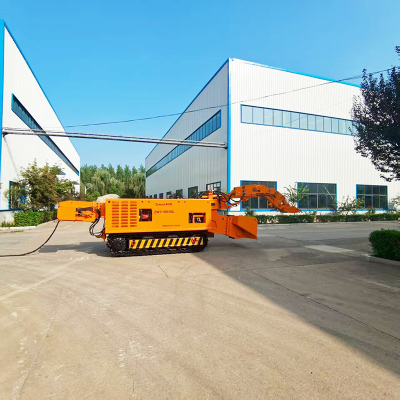
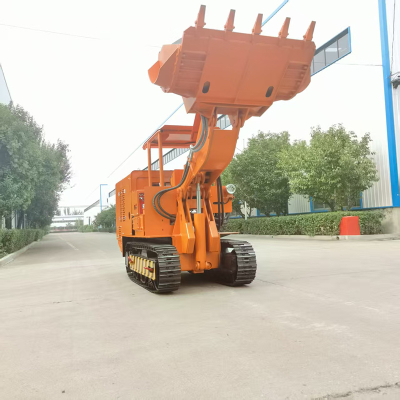
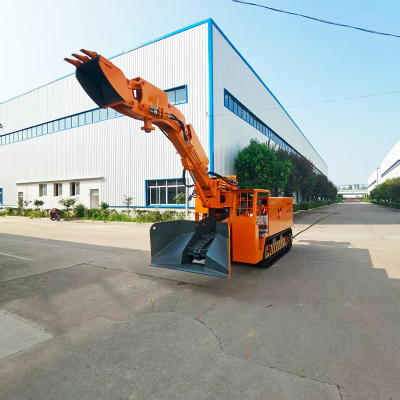
Coal Mine Tunnel Drilling Rig vs. Electric Model: Which Fits Your Mining Project?
Coal Mine Tunnel Drilling Rig vs. Electric Model: Which Fits Your Mining Project?
In today’s fast-evolving mining sector, picking the right coal mine tunnel drilling rig directly shapes a project’s ability to hit efficiency goals, control long-term costs, and stay compliant with industry standards. Two rig types lead the market: traditional full hydraulic coal mine tunnel drill setups (often labeled "hydraulic top-drive units" in industry circles) and modern electric coal mine tunnel drilling rig models. While both serve the core purpose of excavating tunnel spaces for mining, their unique patterns of energy use, environmental effects, and functional capabilities make them better suited for distinct project needs. Below are five key factors to guide your decision.
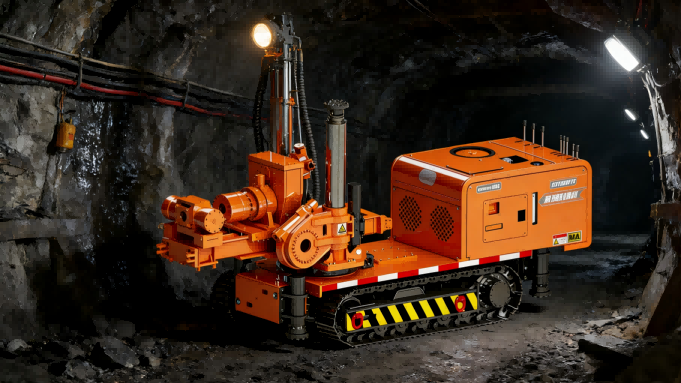
Energy Use & Operational Costs: How Electric and Full Hydraulic Rigs Compare in Efficiency
Energy expenses make up 25–35% of total mining project budgets, so they’re a top consideration when choosing a coal mine tunnel drilling rig. Full hydraulic coal mine tunnel drill systems rely on diesel engines to run hydraulic pumps, with hourly diesel use ranging from 8 to 12 gallons—take the Atlas Copco Boomer E2 C as an example. This consumption shifts based on two key factors: tunnel depth (from 100 to 500 meters) and rock hardness (measured via the Mohs scale, where sandstone and granite fall between 6 and 8). Over a 12-hour shift, this adds up to 96–144 gallons of diesel. With annual diesel price swings of 20–30%, this creates steady cost pressure for mining operations.
On the other hand, electric coal mine tunnel drilling rig models run on either grid power or lithium-ion batteries (with capacities from 100 to 300 kilowatt-hours), wiping out fuel costs entirely. A mid-sized electric rig—like the Sandvik DT922i—uses 15–20 kilowatt-hours per hour. At an average industrial electricity rate of \(0.15 per kilowatt-hour, this costs just \)2.25–\(3 hourly. That’s a sharp contrast to the \)12–\(18 per hour needed to operate a diesel hydraulic rig. Maintenance costs widen this gap even more. **Full hydraulic coal mine tunnel drill** systems need regular oil changes (every 250–500 operating hours), filter swaps (every 150–200 hours), and hose checks—adding up to \)500–\(800 in monthly maintenance bills. **Electric coal mine tunnel drilling rig** models, though, have 30–40% fewer parts, so these recurring costs disappear. For mines running 24/7, electric rigs can cut annual expenses by \)50,000–$80,000.
Environmental Impact: Meeting Strict Emission Rules
For every gallon of diesel burned, full hydraulic coal mine tunnel drill systems release 2.64 pounds of carbon dioxide, 0.05–0.08 pounds of nitrogen oxides, and 0.005–0.01 pounds of particulate matter. To meet standards like the European Union’s Industrial Emissions Directive, mining firms must invest in exhaust scrubbers (costing \(20,000–\)50,000 per rig) or join carbon offset programs—adding \(10–\)15 per ton of carbon dioxide emitted to operational costs.
Electric coal mine tunnel drilling rig models produce no on-site emissions, a game-changer for underground mines. Poor air quality in underground tunnels not only risks worker health but also forces companies to spend \(100,000–\)300,000 upgrading ventilation systems. Even when electric rigs use power from fossil fuel plants, they still have a smaller carbon footprint: power plants operate at 35–45% efficiency, while diesel engines in hydraulic rigs only hit 20–25%. Another risk with full hydraulic coal mine tunnel drill systems is oil spills—high-pressure hoses (running at 2,000–3,000 pounds per square inch) can leak, leading to \(10,000–\)100,000 in fines. Electric coal mine tunnel drilling rig models eliminate this environmental threat entirely.
Performance & How Well Rigs Adapt to Mining Conditions
Full hydraulic coal mine tunnel drill systems deliver 5,000–15,000 newton-meters of torque, making them perfect for drilling through hard rock (Mohs 7–8) or deep tunnels (over 500 meters). They also work well in remote mines where there’s no stable power grid. But these hydraulic rigs weigh 10,000–25,000 pounds—this becomes a problem in narrow tunnels (less than 3 meters wide) and drives up transportation costs, especially for sites with limited access roads.
Electric coal mine tunnel drilling rig models offer 3,000–10,000 newton-meters of torque but stand out for precision: their hole placement tolerance is just plus or minus 2 centimeters. This accuracy is critical for tasks like drilling blast holes (where misalignment can reduce blasting efficiency) and installing support bolts (which need precise positioning to keep tunnels stable). Weighing 5,000–15,000 pounds, electric rigs are more compact, so they move easily in tight underground spaces. They also keep performance steady at high altitudes (above 3,000 meters)—a big advantage over diesel hydraulic rigs, which lose 10–20% of their efficiency in low-oxygen environments. Some manufacturers make hybrid coal mine tunnel drilling rig models that use hydraulic power for heavy work and electric power for precision tasks. But these hybrids cost 20–30% more than single-power rigs, so they only make sense for projects with mixed drilling needs (like alternating between soft and hard rock).
Maintenance Needs & Cutting Downtime
Downtime costs mining operations \(1,000–\)5,000 per hour, so keeping maintenance efficient to minimize downtime is key. Full hydraulic coal mine tunnel drill systems need 50–100 hours of maintenance each year. This includes oil changes (taking 2–3 hours), hose inspections (done every 100 operating hours), and pump calibrations (taking 4–6 hours). A single leak in a hydraulic hose can stop work for 4–6 hours, and fixing or replacing a failed hydraulic pump can take 8–12 hours—leading to thousands in lost production.
In contrast, electric coal mine tunnel drilling rig models only need servicing every 1,000–1,500 operating hours. Their maintenance tasks are simpler: checking electrical connections (1–2 hours), monitoring battery health (1 hour), and inspecting motor cooling systems (2 hours). As a result, electric rigs only have 10–30 hours of downtime per year—70–80% less than hydraulic rigs. Mining companies might need to spend \(5,000–\)10,000 training technicians to work on electric rigs, but the long-term savings from less downtime and lower maintenance costs more than cover this upfront investment.
Safety in Mining Operations
Full hydraulic coal mine tunnel drill systems bring several safety risks for workers. High-pressure hydraulic hoses can burst, spraying hot oil (up to 120–150 degrees Fahrenheit) that causes severe burns. Diesel engines produce toxic fumes, and hydraulic rigs generate 90–100 decibels of noise—loud enough to cause hearing damage over time. To protect workers, companies must provide personal protective equipment: heat-resistant gloves, gas detectors, and hearing protection—costing \(500–\)1,000 per worker each year.
Electric coal mine tunnel drilling rig models operate at 65–75 decibels—about the volume of a normal conversation—so hearing protection isn’t needed in most cases. Without a diesel engine, they produce no toxic fumes, which improves air quality in underground tunnels and reduces respiratory health risks. Modern electric rigs also have advanced safety features: automatic shutdowns if the motor overheats or there’s an electrical fault, easy-to-reach emergency stop buttons, and insulation monitoring systems that spot potential electrical hazards early. Plus, their built-in diagnostic tools flag issues like loose wires or low battery charge before they turn into safety problems.
Go with a full hydraulic coal mine tunnel drill if: Your project involves drilling through hard rock or deep tunnels, your mine is in a remote area without grid access, or your maintenance team has lots of experience with hydraulic systems. This rig is also a good choice if you prioritize short-term productivity over long-term cost savings (like for fast-track projects with tight deadlines).
Choose an electric coal mine tunnel drilling rig if: You want to cut energy and maintenance costs by 30–50%, need to meet strict emission targets (like net-zero goals), operate in narrow tunnels or high-altitude sites, or put worker safety first. Electric rigs work best for projects that last 5 years or more, where upfront costs are offset by long-term savings.
The best coal mine tunnel drilling rig for your project is the one that fits your long-term mining strategy—whether that’s maximizing short-term output or building a sustainable, cost-effective operation that will perform well for years to come.